
PureLight™
PureLight™ is a medical-grade photobiomodulation technology that restores cellular energy levels standard rest cannot reach. It recharges mitochondrial function and clears systemic inflammation.
How PureLight™ works
PureLight™ uses a precise 635nm red-light wavelength, a range clinically studied for its ability to be absorbed by mitochondria – the energy centres of your cells.
When this light is absorbed, it supports improved cellular energy production (ATP), better oxygen utilisation, and enhanced recovery processes.
There is no heat, no invasive contact, and no downtime.
What PureLight™ does for your body
Restore cellular energy
PureLight™ activates mitochondria – the ‘power plants’ inside your cells – causing them to produce significantly more energy (ATP) to help the body function and heal.
Mobilise fat cells
When fat cells are exposed to PureLight™, they temporarily open up, releasing stored energy similar to when you get to the fat burning stage of working out.
Rejuvenate Skin
PureLight™ significantly reverses the visible signs of ageing, resulting in a measurably firmer and more youthful complexion.
What happens during your session
Each session lasts 20 minutes, delivering a high-intensity metabolic cycle, providing the deep muscle recruitment used in elite performance and rehabilitation settings. The experience is powerful yet painless, and places zero stress on your joints.
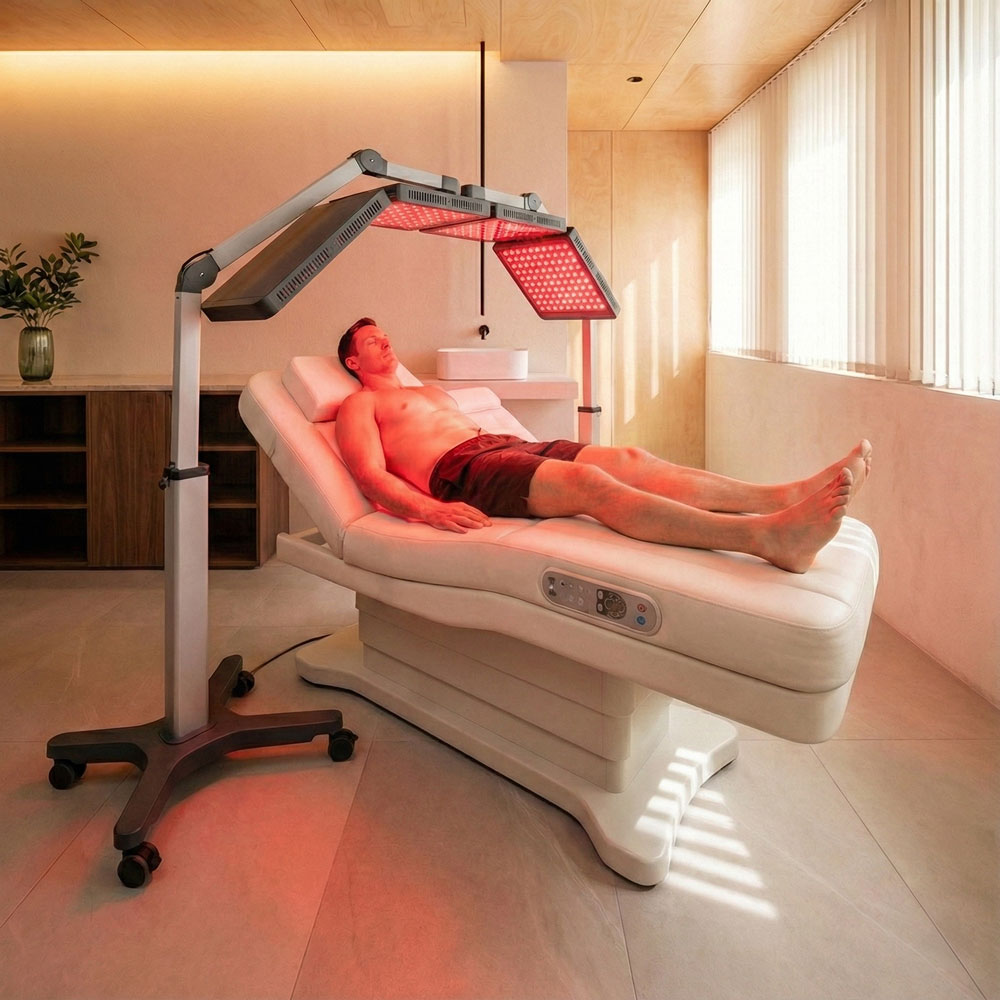
You lie comfortably on a treatment bed while medical-grade LEDs are positioned over key areas.
The device emits a calibrated 635nm wavelength designed for deep tissue penetration. This allows photons to reach the mitochondria and support cellular energy pathways.
You feel no heat or temperature change. Most clients report a sense of calm as the light stimulates natural cellular processes.
Your cells use the absorbed light to support energy production and recovery, helping you feel more restored after periods of stress or fatigue.
Lorem ipsum dolor sit amet, consectetur adipiscing elit. Ut elit tellus, luctus nec ullamcorper mattis, pulvinar dapibus leo.
Try the Aurion Protocol
We offer a limited number of single-session experiences for individuals who want to understand how the Aurion Protocol feels before enrolling in a programme. Access begins with a brief consultation with our medical expert to confirm suitability and ensure the protocol is appropriate for your goals.
Your journey to optimal health starts here
Unsure which protocol is right for you? Submit your details and a performance specialist will contact you to discuss your specific needs.